Overview
AI agent overview
How the Asks AI agent answers customers, the setup checklist, and where each setting lives.
The AI agent is the model that answers your customers. It reads the conversation, retrieves the relevant material from your knowledge base, optionally calls tools — custom actions, MCP tools, or built-ins like order lookup — and writes a reply grounded in what it found, citing its sources. When it can't help, or the customer asks for a person, it escalates to your team; when the customer's question is settled, it can resolve the conversation on its own. Configure it at app.asks.app/ai-agent.
How a reply is produced
- Retrieve — the agent searches your knowledge base and answers from that content rather than inventing.
- Act — if the question needs live data or a side effect, it calls a tool: a custom action against your API, a connected MCP tool, or a built-in.
- Respond — it writes the reply in your configured tone and length, in the customer's own language, citing the sources it used.
- Escalate or resolve — it hands off to a human when your escalation rules fire, and closes conversations it's confident are solved (on by default). After a human has handled a conversation, it can be handed back to the AI, which picks up with the full context.
Finding your way around
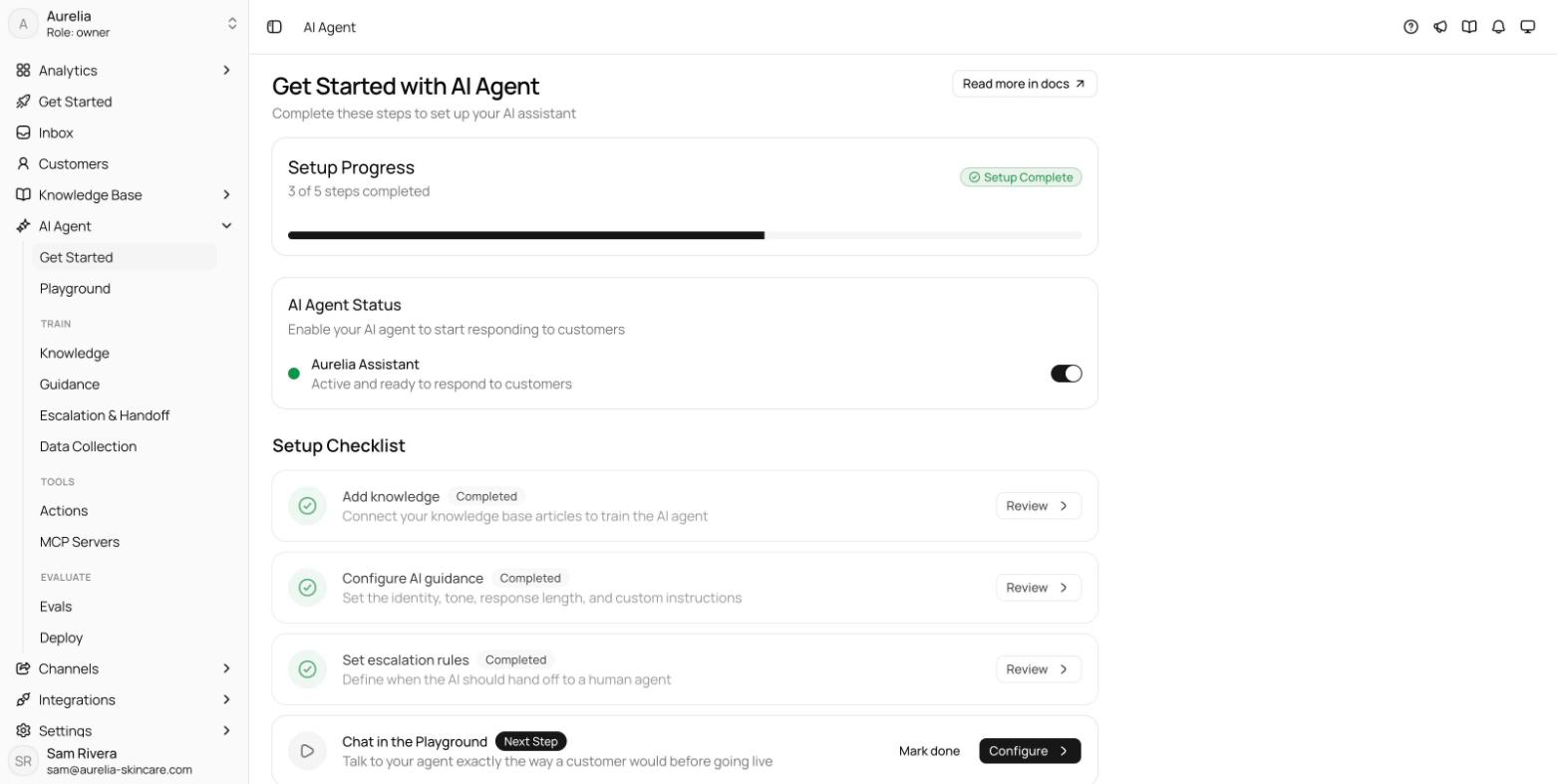
The AI agent section starts with Get Started and the Playground, then groups the rest: Train (Knowledge, Guidance, Escalation & Handoff, Data Collection), Tools (Actions, MCP Servers), and Evaluate (Evals, Deploy).
The master switch
The AI Agent Status card on the Get Started page controls whether the agent responds at all — the same toggle also appears on the Deploy page. Off means no AI replies on any channel; everything else — knowledge, guidance, actions — stays configured and waits.
The agent's name is set on the Guidance page; customer-facing branding — colors, launcher, avatar — comes from your widget settings.
AI disclosure
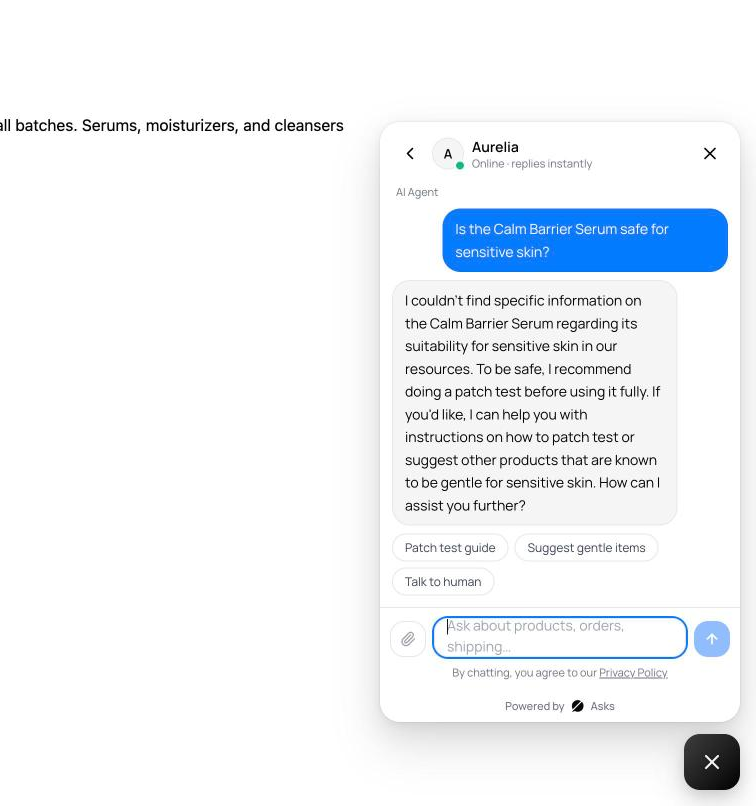
Every message the agent sends carries an "AI Agent" label in the chat. There is no setting for this — customers should know when they're talking to an AI, and Asks enforces that transparency for every workspace.
Setup checklist
The Get Started page tracks five setup steps with a progress bar. Each step links to its page; you can mark steps done as you go.
Connect knowledge base articles, websites, and documents so the agent has something to answer from.
Pick the model tier, tone, response length, and custom instructions. See Model & guidance.
Define when the AI hands off to a human. See Escalation & human handoff.
Talk to your agent exactly the way a customer would before going live. See Playground & evals.
Turn the agent on where you want it to answer.
Deploy per channel
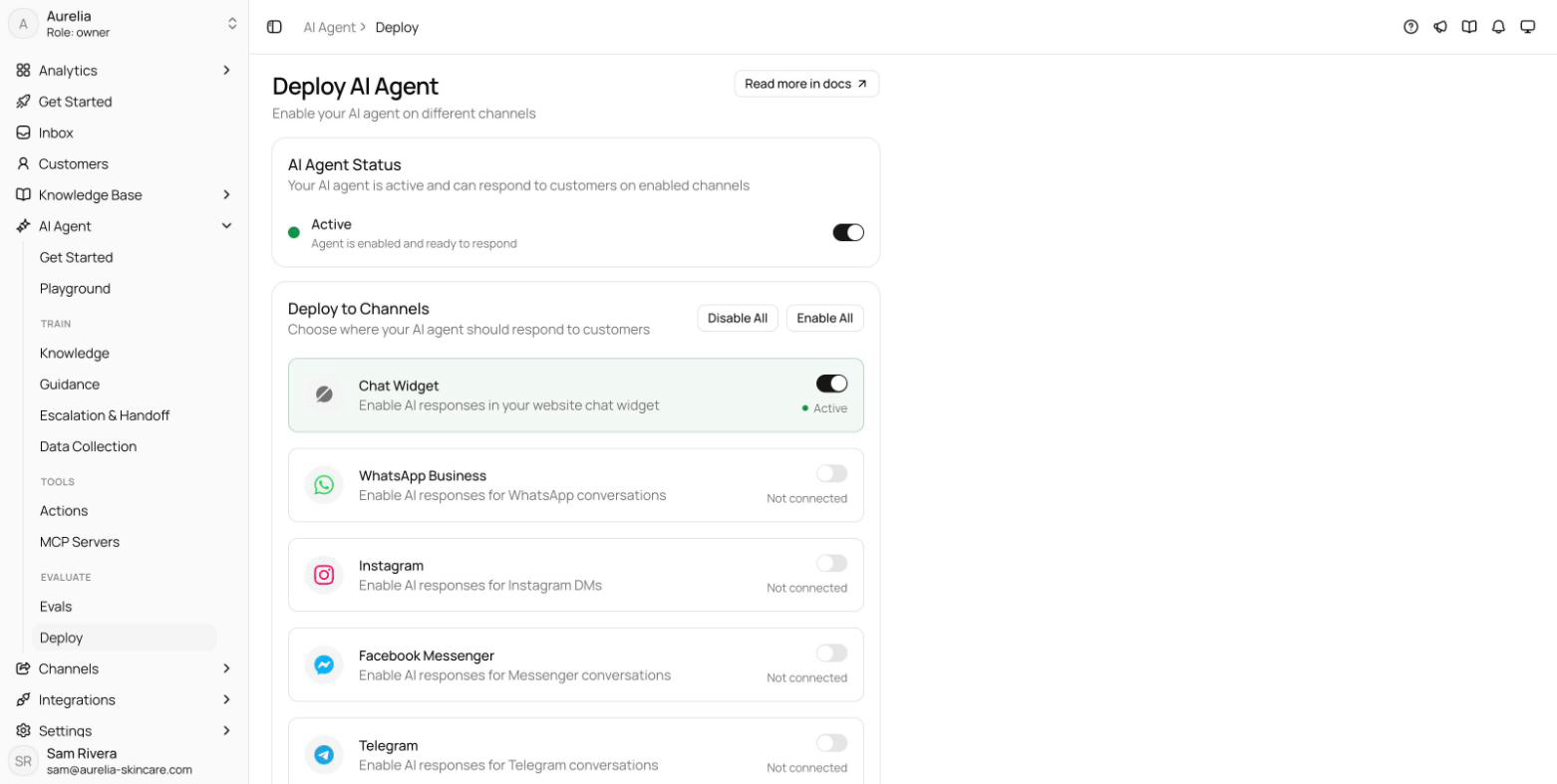
The agent is enabled per channel, not globally. On the Deploy page you toggle AI responses independently for the chat widget, WhatsApp Business, Instagram, Facebook Messenger, Telegram, Slack, and the public API — or enable and disable all at once. Channels you haven't connected yet prompt you to connect them first, and deploying is gated until the knowledge and guidance steps are complete. Some teams run AI-first on the widget but human-only elsewhere.
AI usage
Every AI-sent message consumes credits based on the model tier — 1, 4, or 8 credits per message. The Subscription page breaks the last 30 days of consumption down by tier and shows the credit history, so you can see where your monthly allowance goes. Allowances per plan are in Plans and limits.